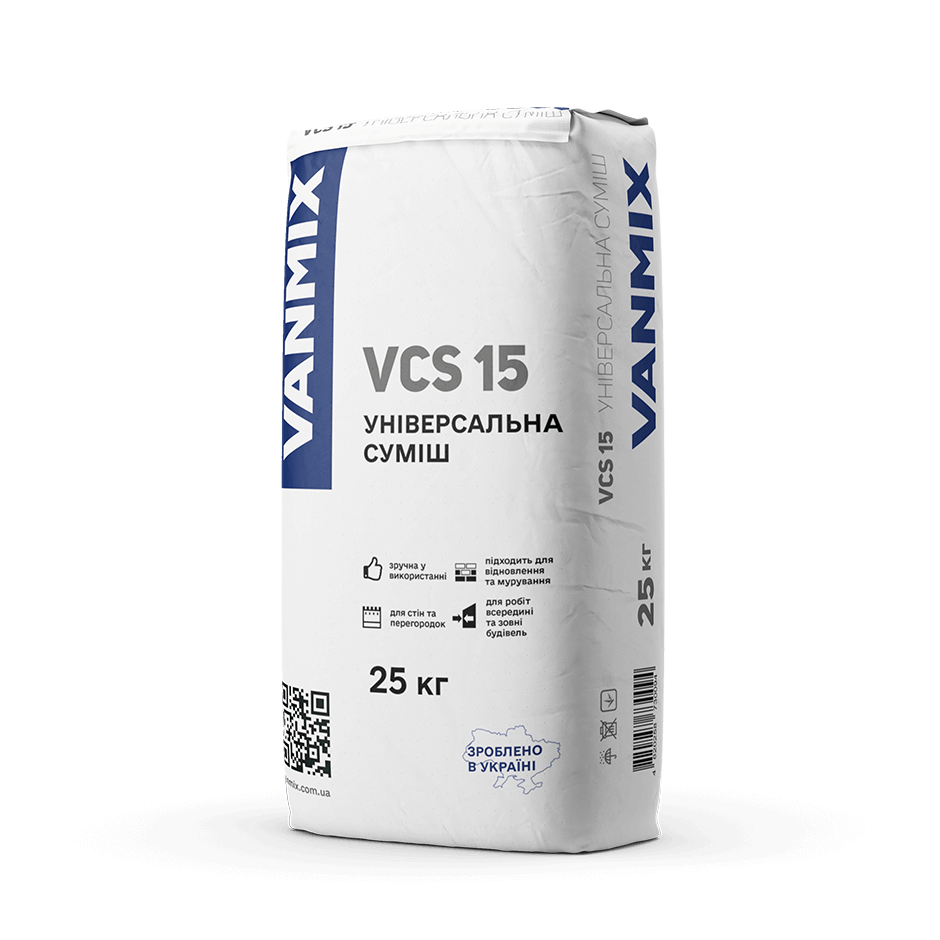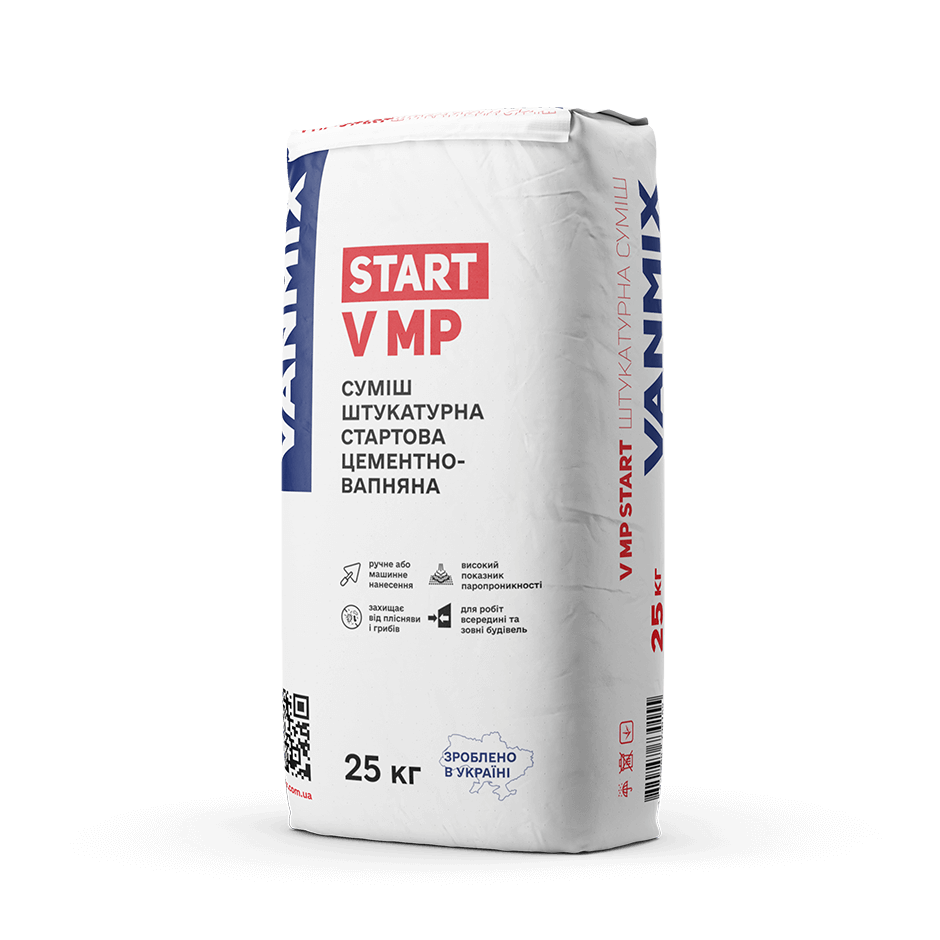
Plaster starting cement-lime mixture — V MP START
Starters
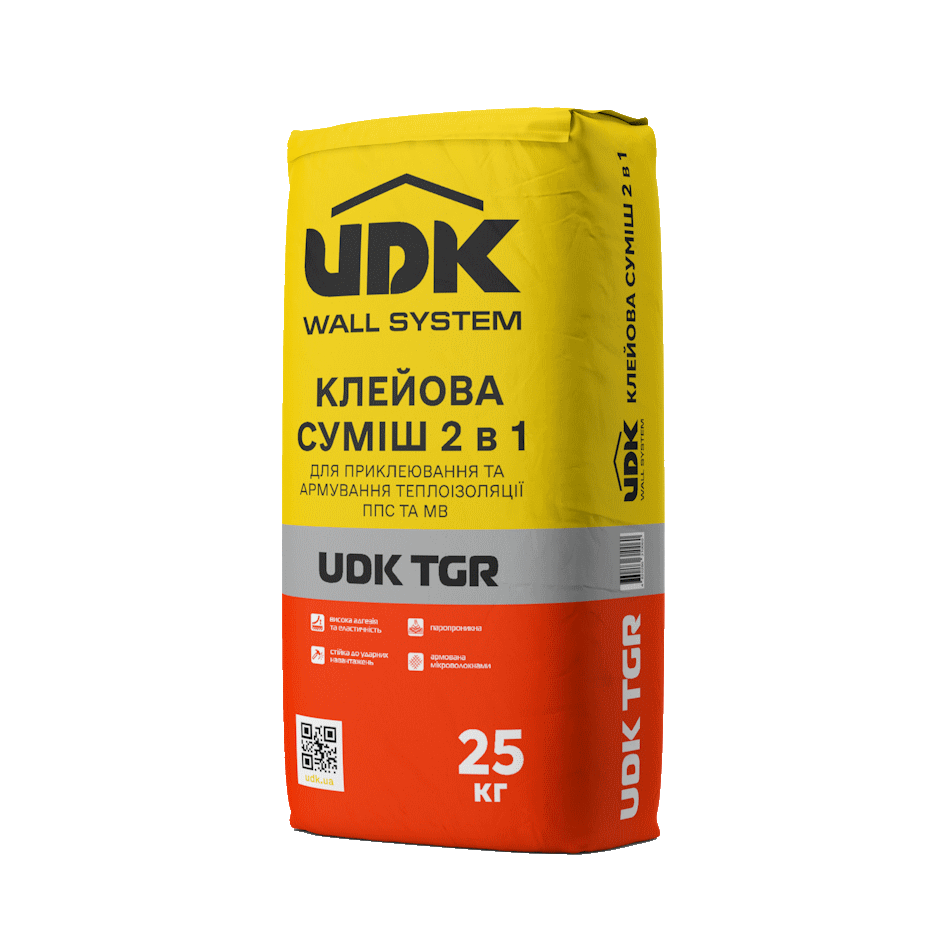
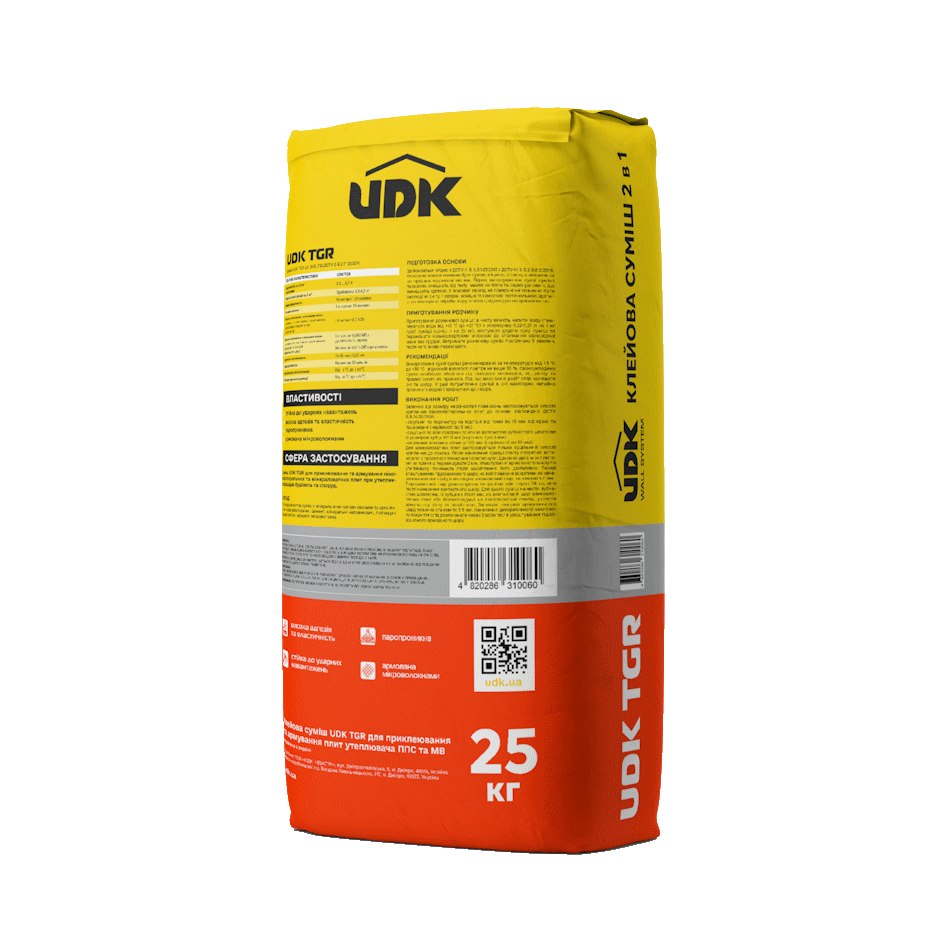
Field of application:
For gluing and reinforcing with waterproofing polystyrene foam plates during insulation of facades of buildings and structures. It is intended for the implementation of a reinforcing layer with improved waterproofing properties and gluing of polystyrene foam plates during the insulation of building facades.
Features:
Advantages:


| Storage |
Cement, mineral fillers, polymer modifiers, reinforcing microfibers |
|
Water consumption per 25 kg (kg) of dry mixture, l (l) |
5.5....6.7 |
| Consumption of dry mixture per 1 m² (m2) | Approximately 4.5-6.5 kilograms (kg) |
|
Expiry date, min (min) |
At least 120 |
|
Adjustment time, min (min) |
At least 10 |
|
Adhesion strength with aerated concrete block after endurance in air-dry conditions, MPa (MPa) (use as glue for PP and MV) |
Not less than 0.5 |
|
Adhesion strength with aerated concrete block after endurance in air-dry conditions, MPa (MPa) (use as a reinforcing layer) |
Not less than 0.080 to expanded polystyrene; Not less than 0.015 min |
| Coarseness of aggregate, mm (mm) | Not more than 0.63 |
|
Frost resistance, cycles |
At least 50 |
| Application temperature | From +5 ⁰С to +30 ⁰С |
|
Operating temperature |
From -50 ⁰С to +70 ⁰С |
It is carried out in accordance with DSTU-NB A.3.1-23:2013 and DSTU-NB B.2.6-212:2016. The surface of the base must be dry, strong, even, with low and uniform water absorption. Before applying the dry mixture, the surface is cleaned of dust, oil stains and other substances that reduce adhesion. In winter, there should be no ice or snow on the surface. Surfaces that are weak and highly absorbent should be pre-treated with primers, according to the purpose.
Preparation of mortar mixture: pour water into a clean container (water temperature from +15 °C to +25 °C) at the rate of 0.22-0.27 l (l) per 1 kg (kg) of dry mixture (5.5-6 .7 l (l) per 25 kg (kg)), gradually add the dry mixture and mix with a low-speed mixer until a homogeneous mass without lumps is obtained. After 5 minutes mix again.
The use of dry mixture is recommended at temperatures from +5 °C to +30 °C and relative air humidity not higher than 65%. The freshly laid mixture must be protected from rapid drying, from rain and direct sunlight. Eyes and skin should be protected during work. If the mixture gets into the eyes, it is necessary to immediately wash them with water and consult a doctor.
For gluing heat-insulating boards, it is necessary to apply the adhesive mass from the reverse side of the board using the striped-point method (on the perimeter of the plate - stripes about 5 cm wide, in the middle of the board 3 palm-sized strokes).
The amount of adhesive solution and the thickness of the adhesive layer, depending on the unevenness of the base, which varies so that the total contact area with the adhesive is ≥ 40%. Irregularities up to ± 1 cm can be leveled with a layer of glue. Glued insulation boards must be attached to the wall from the bottom up, move, and press well.
Do not apply joint glue between the insulation plates. Watch the location of the plates in the run-up and vertical deviation.
Also, one of the means of applying the mixture is surface decoration from aerated concrete, namely from UDK aerated concrete blocks. To prepare the decoration of the masonry, which is made of porous concrete blocks, it is necessary to carefully prime the blocks with acrylic soil, after the soil has dried for 2-4 hours, it is possible to start decorating the surface with a mixture. If the seams between the joints of aerated concrete blocks were previously treated with VG TM "VANMIX" aerated concrete glue, then it is enough to apply the glue for reinforcement and gluing directly to the surface of the aerated concrete block without using a reinforcing mesh. If the seams between the gas blocks are treated unevenly, or not treated at all, then the mixture must be applied using a reinforcing mesh. After complete drying of the mixture for 24 - 48 hours, depending on the temperature and humidity of the air, it is possible to proceed with further finishing of the surface.
If it is planned to decorate the surface with plaster of the type "Baranets" or "Barkwood", then the surface of the reinforced mixture must be thoroughly primed with an acrylic primer, but only with the help of a roller or mackerel, that is, thoroughly soak the surface to level the water absorption. After the priming layer has completely dried for 8-12 hours, you can apply a decorative finish followed by painting it.
Paper bags with an inner polyethylene layer of 25 kg.
The mixture must be stored in the company's airtight packaging in a dry room, on pallets. The shelf life is 12 months from the date of manufacture indicated on the package.
On average, 1.7 kg of glue is used per 1 m2, depending on the thickness of the applied layer and the condition of the surface.